
Before commissioning a website redesign, agree what customers need to do, which existing pages must survive and who will look after the finished site. Put those decisions in a short written brief before asking for a fixed quote. A page count and a few websites you like are useful starting points, but they leave too much open to interpretation.
For a Rochdale business looking for web design, the brief should also explain where you work and which enquiries you want. A local trades firm needs a different customer journey from a consultancy selling nationally. Start with that distinction, then agree the content, account access and launch checks below.
Define the enquiry you actually want
Choose the main action for each important page: a phone call, a quotation request, a booking or a purchase. Describe what a useful enquiry contains. A contractor might need a postcode and a description of the job; a professional practice might need the service required and a preferred contact method. Avoid collecting information simply because there is room for another field.
Write down where those enquiries should arrive and who handles them. Ask the designer to demonstrate the whole journey, from a customer using the mobile form to the message reaching the right inbox. Include confirmation messages and failed submissions in the demonstration. A form that looks finished is not enough to sign off that part of the project.
Decide what to keep before changing URLs
Give the agency access to your existing page inventory and Search Console reporting. Mark the pages that attract relevant searches, useful enquiries or links from other websites. Do not remove a useful service page just because it does not fit the first navigation sketch. Ask whether its address can stay the same while its content and layout improve.
Where addresses must change, request a written mapping from each old page to its relevant replacement, plus redirect testing before launch. Google’s site-move guidance recommends URL mapping and testing redirects.[1] Google also warns that rankings can fluctuate while it recrawls and reindexes a changed site, so do not treat an immediate ranking improvement as a launch acceptance test.[1]
Assign the copy and photography
Agree who writes each page, who checks it and when it is due. Specify whether the quote includes interviews, copy editing, photography or only placing material you supply. Give one person inside the business responsibility for gathering feedback, rather than asking the designer to reconcile separate instructions from several colleagues.
Supply accurate service descriptions, locations served and the questions customers ask before buying. For local pages, explain genuine differences in the work you do rather than requesting the same text with another town name inserted. Only provide testimonials, project photographs and credentials you have permission to use and can substantiate. If an image is illustrative, keep its description honest.
Check the site on a phone and without a mouse
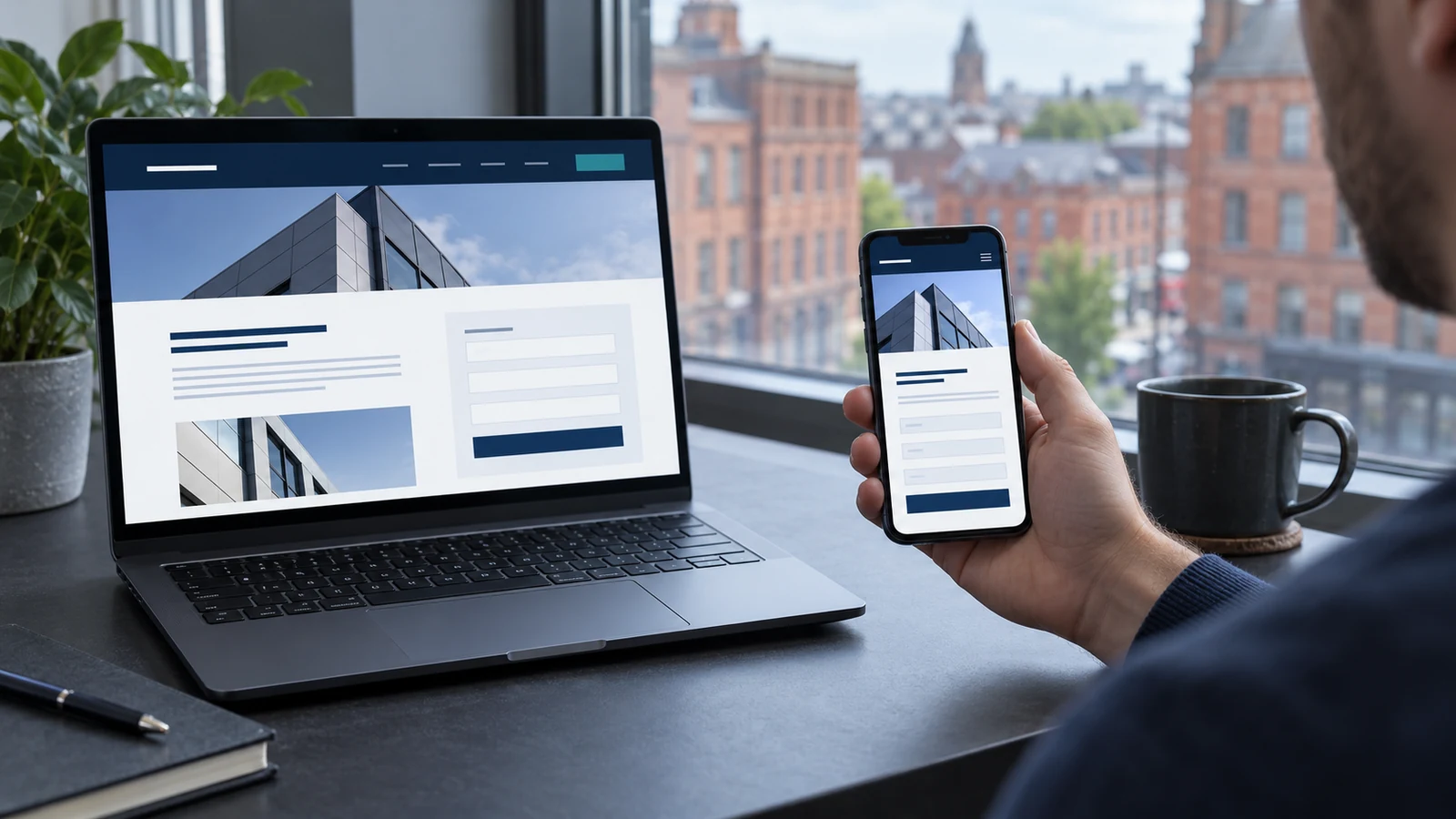
Ask to review a working mobile version before approving the design. Try the menu, read a service page and submit an enquiry yourself. Check whether the phone number works, whether important text remains readable when enlarged, and whether error messages explain what needs fixing. Use ordinary mobile connectivity as well as the agency’s office connection.
Include keyboard operation, visible focus, contrast and form labels in the testing brief. W3C’s Easy Checks covers these kinds of initial accessibility checks, but explicitly says that it is not a complete accessibility evaluation.[2] Agree whether the project includes a fuller review and how findings will be resolved. Do not accept a single automated score as your only evidence that customers can use the site.
Agree access and ongoing responsibilities
Ask for a written account register covering the domain registrar, hosting, website administration and measurement tools. Agree which accounts your business controls, which the agency manages and how access will be handed over if you change supplier. Use named accounts with appropriate permissions rather than sharing one login between everyone involved.
Separate the build price from ongoing charges. Ask what hosting, maintenance and content changes include, who restores a backup, and how urgent faults are reported. Record any third-party subscriptions and renewal responsibilities. Put arrangements for leaving the service in writing while the relationship is new, including content exports and assistance with moving the site.
Bring a brief, then ask for a scoped proposal
Your first brief can be short. Bring the current website address, the services you want to promote, examples of useful enquiries and the problems customers report. Add any deadline and budget constraints so the proposal addresses the job you can actually commission.
BMT’s website design and development service is a starting point for that discussion. Send us your existing website and priorities so we can discuss the scope. Before agreeing a start date, ask for the deliverables, responsibilities and launch checks in writing.
Sources
[1] https://developers.google.com/search/docs/crawling-indexing/site-move-with-url-changes: Google Search Central: site moves and migrations
[2] https://www.w3.org/WAI/test-evaluate/preliminary: W3C WAI: Easy Checks, a first review of web accessibility